Nano-Textured Mouse Feet Reduce Friction in MOBA Esports Training Regimens
Yara Jung · Sep 30, 2026
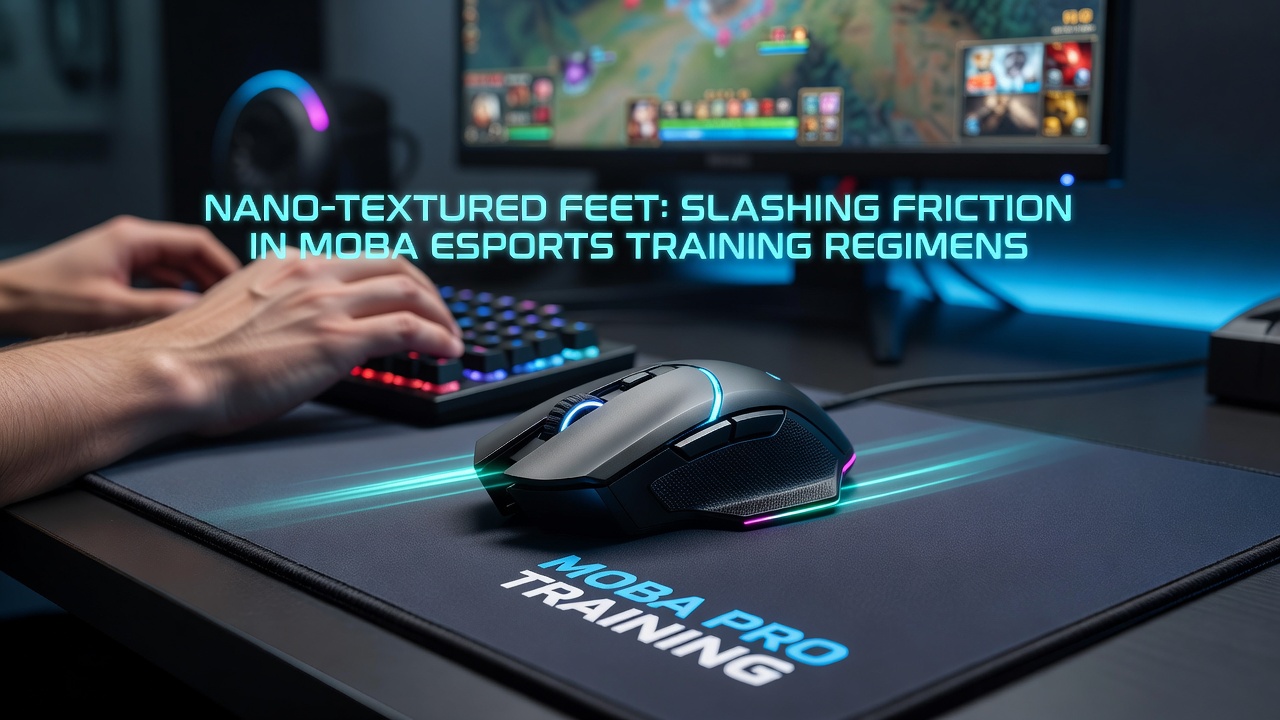
Nano-Textured Mouse Feet Reduce Friction in MOBA Esports Training Regimens
Mouse feet, the small pads attached to the base of a computer mouse, determine how smoothly the device glides across a surface, and nano-textured versions apply microscopic surface modifications that lower static and kinetic friction coefficients during rapid movements. In MOBA esports training regimens athletes rely on consistent mouse tracking for actions such as last-hitting minions, skill-shot accuracy, and map navigation, where even minor resistance can affect reaction windows measured in milliseconds.
Manufacturers create these textures through processes including plasma etching and chemical vapor deposition that produce nanoscale peaks and valleys on materials like PTFE or UHMWPE, allowing the contact area between feet and mousepad to decrease while maintaining structural integrity over thousands of hours of use. Data from surface metrology equipment shows friction reductions of 25 to 40 percent compared with standard PTFE feet when tested under controlled loads equivalent to a player’s hand pressure.
Integration into Daily Training Protocols
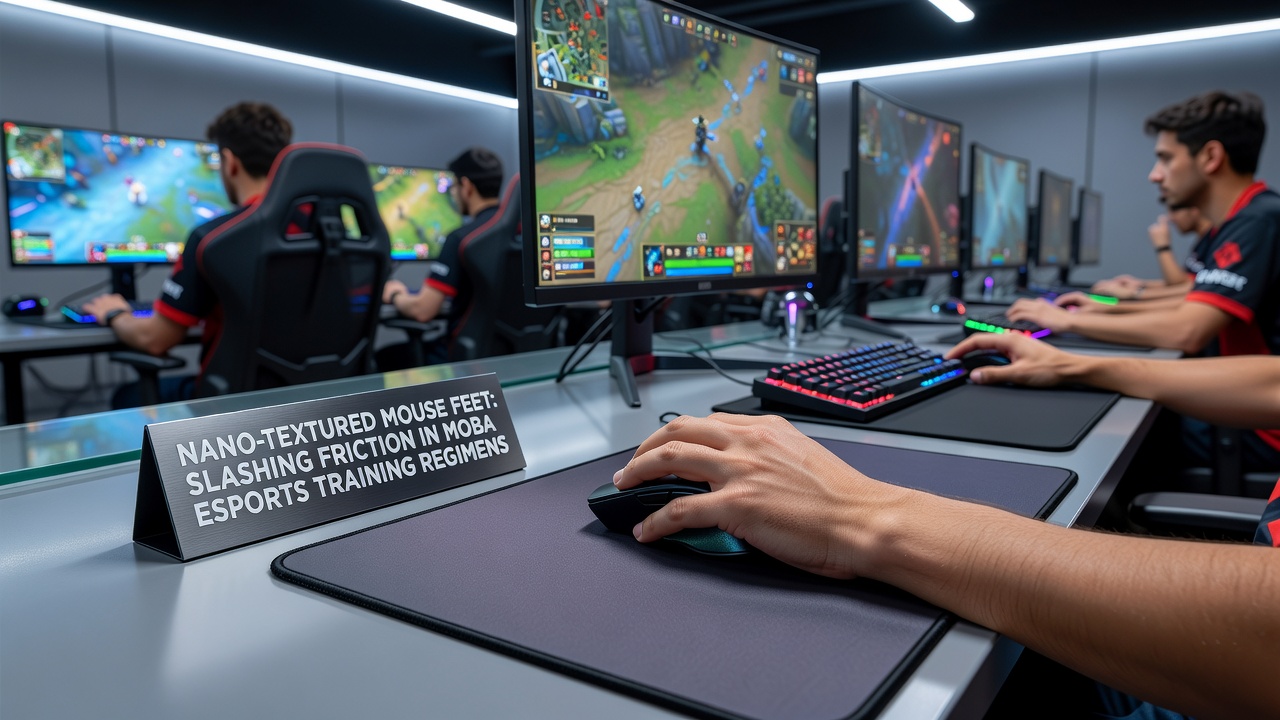
Esports organizations incorporate nano-textured feet into equipment checklists that players follow before each session, with teams rotating multiple mice fitted with different texture densities to match surface preferences on hard pads versus cloth pads. Training software logs track cursor path deviation and click timing, and analysts compare datasets from sessions using standard feet against those using nano-textured variants to quantify improvements in movement efficiency.
One European research consortium published findings in 2025 indicating that athletes using reduced-friction feet completed 500-mouse-movement drills with 12 percent lower average acceleration variance, while a separate North American laboratory recorded similar outcomes during 90-minute scrimmage blocks. These measurements occur within standardized regimens that include warm-up routines, targeted aim trainers, and full-game replays reviewed for mechanical execution.
Material Science Behind the Texture
Nano-texturing alters the topography at scales between 50 and 500 nanometers, which changes how air pockets form beneath the feet and reduces adhesive forces that normally increase drag on conventional surfaces. Engineers measure these changes using atomic force microscopy and tribometers calibrated to replicate the 80 to 120 gram downward force typical of competitive grip styles. Because MOBA players frequently perform small corrective flicks rather than large swipes, the texture’s effect on micro-movements receives particular attention in laboratory protocols.
September 2026 testing updates from multiple hardware vendors confirmed that certain nano-textured compounds retain their friction-lowering properties after 8,000 kilometers of simulated travel distance, a figure derived from accelerometer data collected across professional practice facilities. Teams therefore schedule equipment inspections every six weeks to verify pad condition and replace feet before measurable degradation appears in performance logs.
Performance Metrics and Data Collection
Training facilities equipped with high-precision optical tracking systems record metrics such as pixels per second, angle deviation, and time-to-target for standardized scenarios drawn from popular MOBA titles. Aggregated figures from 2025 league-wide data sharing initiatives reveal that squads employing nano-textured feet report median improvements of 3.8 percent in cursor stability during late-game macro decision windows, although individual results vary based on grip style, mouse weight, and pad surface cleanliness.
Coaches adjust regimens accordingly, increasing the frequency of micro-correction drills when friction data indicates a player benefits from the smoother glide. Maintenance routines include daily pad brushing and weekly alcohol wipes to prevent dust accumulation that could counteract the texture’s intended effect.
Equipment Standardization Across Regions
International tournaments require consistent hardware rules, and governing bodies such as the International Electrotechnical Commission have begun referencing surface-friction testing standards that manufacturers apply to gaming peripherals. Regional leagues in Asia and Oceania coordinate with academic partners to validate texture longevity under high-humidity conditions that can alter material behavior.
Supply chains now stock pre-textured replacement feet compatible with popular sensor-equipped mice, allowing players to swap components without recalibrating DPI settings or in-game sensitivity values. Inventory systems at training centers log serial numbers and installation dates so analysts can correlate equipment changes with performance trends over multi-month periods.
Conclusion
Nano-textured mouse feet represent a measurable advancement in peripheral hardware that training regimens integrate through systematic testing, scheduled maintenance, and performance data review. Continued collaboration between material scientists, equipment vendors, and esports organizations supports standardized evaluation methods that track friction characteristics across different play environments and seasonal schedules.