Nanocoating Applications on Circuit Boards Prevent Moisture Damage in Humid Outdoor Mobile Gaming Setups
Yara Jung · Sep 16, 2026
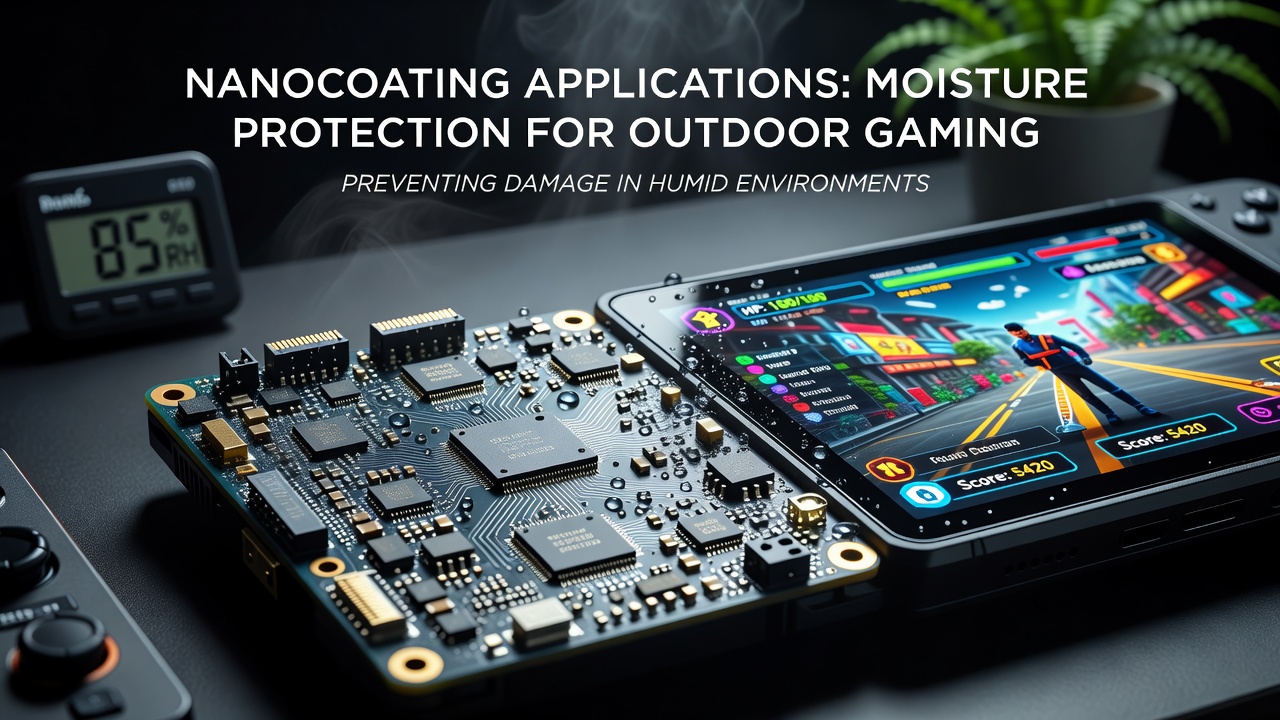
Nanocoating Applications on Circuit Boards Prevent Moisture Damage in Humid Outdoor Mobile Gaming Setups
Outdoor mobile gaming setups face persistent challenges from humidity when devices operate in coastal regions, tropical climates, or during extended sessions in variable weather conditions, and nanocoatings applied to circuit boards have emerged as a targeted solution that forms an ultrathin barrier at the molecular level. These coatings, typically composed of materials such as silicon dioxide or fluoropolymers deposited through vapor phase processes, create hydrophobic surfaces that repel water molecules while maintaining electrical conductivity and thermal dissipation properties essential for handheld consoles and portable PCs.
Researchers at institutions across multiple continents have documented how moisture ingress leads to corrosion on exposed traces and solder joints, resulting in intermittent failures or complete device shutdowns during gameplay. Data from electronics testing facilities indicate that uncoated boards exposed to 85 percent relative humidity at 85 degrees Celsius experience accelerated degradation within weeks, whereas nanocoated equivalents show measurable reductions in failure rates according to accelerated life testing protocols standardized by industry groups.
Composition and Application Methods for Gaming Hardware
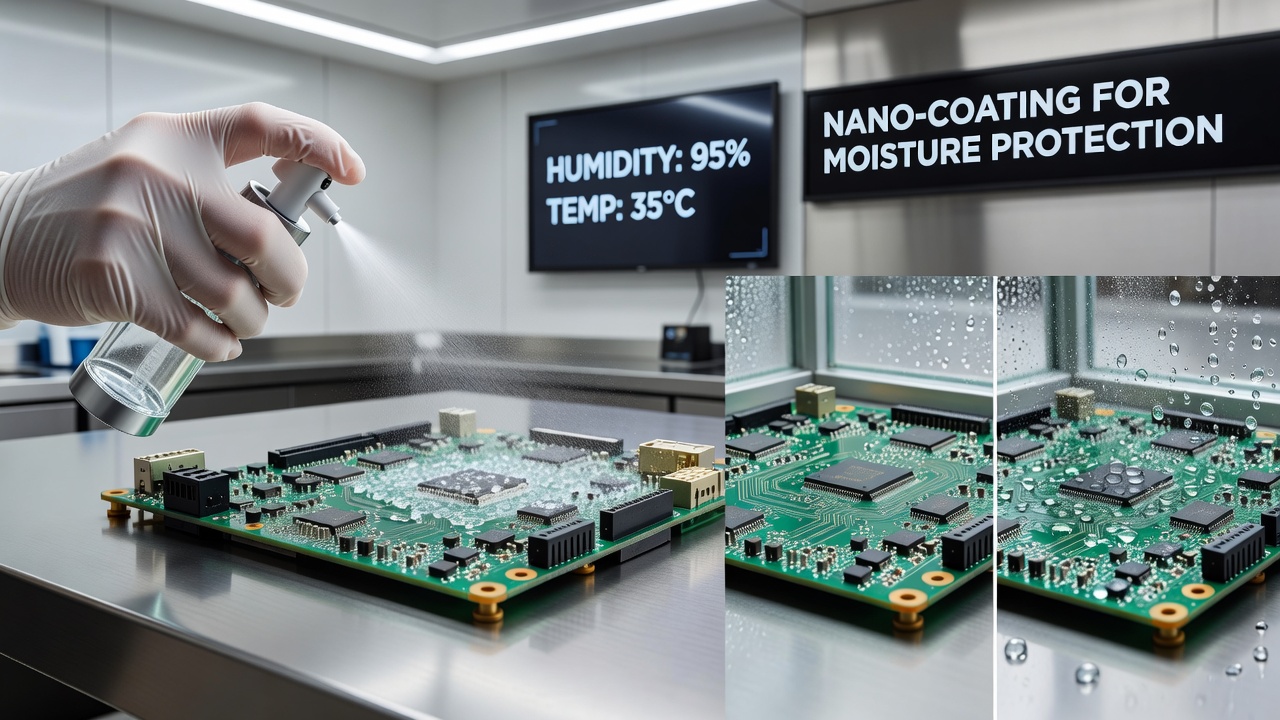
Nanocoatings achieve their protective qualities through precise thickness control measured in nanometers, which allows them to conform to intricate board geometries including connectors, capacitors, and microchips without adding bulk or interfering with signal integrity. Application occurs via plasma-enhanced chemical vapor deposition or atomic layer deposition, techniques that ensure uniform coverage even on three-dimensional surfaces common in compact gaming devices designed for portability.
Manufacturers integrate these processes during assembly lines, where boards receive treatment before final enclosure sealing, and independent labs have verified that the resulting layers withstand repeated thermal cycling between indoor air conditioning and outdoor heat without cracking or delamination. This durability proves particularly relevant for setups involving devices like handheld gaming PCs used near water bodies or in monsoon-prone areas where sudden humidity spikes occur.
Performance in Real-World Humid Conditions
Field observations compiled by electronics reliability programs reveal that coated circuit boards maintain functionality longer when subjected to condensation events, such as those triggered by rapid temperature drops after sunset in humid environments. One study from a European research consortium tracked devices over multi-month periods and found that nanocoated units resisted short circuits caused by water bridging between conductive paths, while uncoated controls required frequent maintenance interventions.
Turnaround times for repairs decrease because the coating preserves underlying components, and operators of tournament-style outdoor events note fewer interruptions during extended play in challenging climates. Figures from regulatory testing in Asia-Pacific regions further support these outcomes, showing consistent performance metrics across batches treated with different nanocoating formulations.
Integration with Broader Device Protection Strategies
While nanocoatings address board-level vulnerabilities, they complement other design elements such as sealed ports, desiccant packs, and elevated chassis designs that promote airflow. Engineers combine these approaches when developing equipment for mobile esports qualifiers held in open-air venues, where ambient moisture levels fluctuate unpredictably throughout the day and night.
Standards organizations including the International Electrotechnical Commission have updated guidelines that reference conformal nanocoatings as viable options for meeting ingress protection ratings in consumer electronics. International Electrotechnical Commission guidelines outline testing sequences that simulate tropical exposure, and compliance data demonstrates how treated boards pass these evaluations at higher rates than untreated alternatives.
Developments Observed Through September 2026
By September 2026, refinements in coating chemistry have incorporated self-healing additives that repair minor abrasions sustained during device transport or handling, extending service life for users who frequently relocate gaming stations between indoor and outdoor spaces. Academic papers from North American universities detail how these next-generation formulations maintain dielectric strength even after exposure to salt-laden air common in seaside gaming events.
Supply chain reports indicate increased adoption among producers of portable consoles, driven by demand from regions with high humidity indices, and certification bodies in Australia have begun recognizing specific nanocoating processes under updated environmental and durability benchmarks. CSIRO durability research highlights quantitative improvements in moisture resistance without compromising heat transfer during intensive graphics processing loads.
Conclusion
Nanocoating technology continues to expand its role in safeguarding circuit boards within outdoor mobile gaming configurations by delivering consistent barriers against humidity-induced failures across diverse geographic and operational scenarios. Ongoing refinements supported by international testing frameworks and regional research efforts ensure these solutions remain aligned with evolving device architectures and environmental demands.